
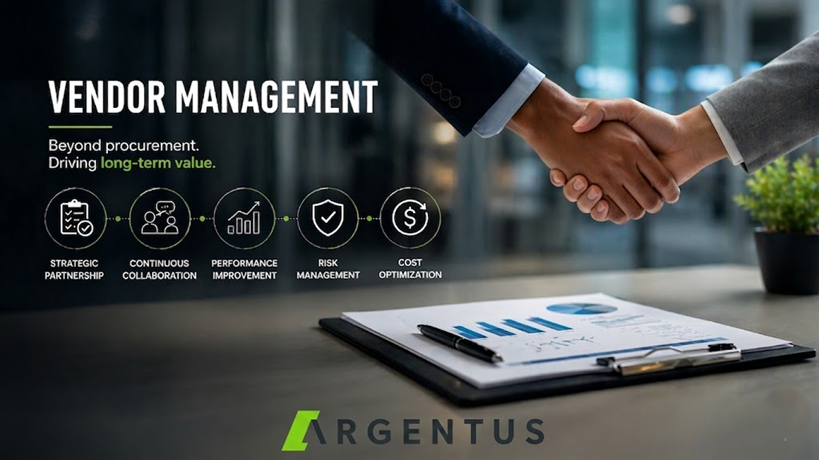
We recently came across a thoughtful contribution from Mark Morrissey that challenges a common assumption in supply chain management. While procurement and sourcing often take centre stage, this piece highlights why vendor management is the true driver of long-term value.
With organizations facing increasing complexity, risk, and rapid technological change, this perspective is a timely reminder that what happens after the contract is signed is just as important—if not more—than the sourcing process itself.
In my experience, I have seen many organizations that have very capable strategic sourcing departments. However, they are not always truly strategic. They run an RFx to achieve a very specific and often narrow objective. This is transactional. Once the contract is signed, it is handed over to the business line stakeholders, and the strategic sourcing team moves on to the next RFx.
This is where vendor management differentiates itself.
A vendor management team owns the contract and vendor agreement from cradle to grave. This ownership provides opportunities to have ongoing dialogue with the vendor to drive continuous improvement in how the vendor is delivering goods and services.
Over the life of the contract, the company’s requirements or roadmap may change. It is important that vendors are able to adjust and keep up with these changing requirements, versus a very static contract where the vendor requests a change order and additional fees to accommodate every change.
On the vendor side, it is important that the vendor is able to deliver enhanced value by leveraging opportunities found through efficiencies as their capabilities improve. These opportunities can be translated into ongoing cost reductions in the contract, which would likely lead to greater aggregate savings than going to market and taking on the risks of transitioning to an alternate vendor.
The world has changed and continues to change at an unprecedented speed—we all know that. This change has driven increased risk in environmental, geopolitical, and financial areas. Understanding and monitoring the risks that a company’s vendors are exposed to has become not only necessary but crucial.
Here in Canada, public or larger companies have to report on child labour within their supply chains. A company is exposed to the same risks as its vendors through the supply chain. This is why monitoring and addressing risks is an important part of vendor management.
Now more than ever, vendor management has increased in importance.
The rapid rise in AI is fundamentally changing how companies do business. This creates greater opportunities to collaborate with vendors to improve how goods and services are delivered—more reliable delivery, reduced lead times, faster software development, reduced ticket volumes, and lower direct labour in managed services.
All these opportunities come from efficiencies, which ultimately translate into savings.
Vendor management is the truly strategic link in supply chain management—an area not fully explored by companies, as the mindset is still focused on running RFPs and selecting the best fit for a defined need.
We hope you found this contribution as insightful as we did. It’s a strong reminder that procurement doesn’t end with supplier selection—it begins there.
As always, stay tuned to the Argentus blog for more insights into the evolving world of supply chain and procurement. If you have any hiring needs or are looking to build out your supply chain team, feel free to reach out at recruit@argentus.com
0 Comments