
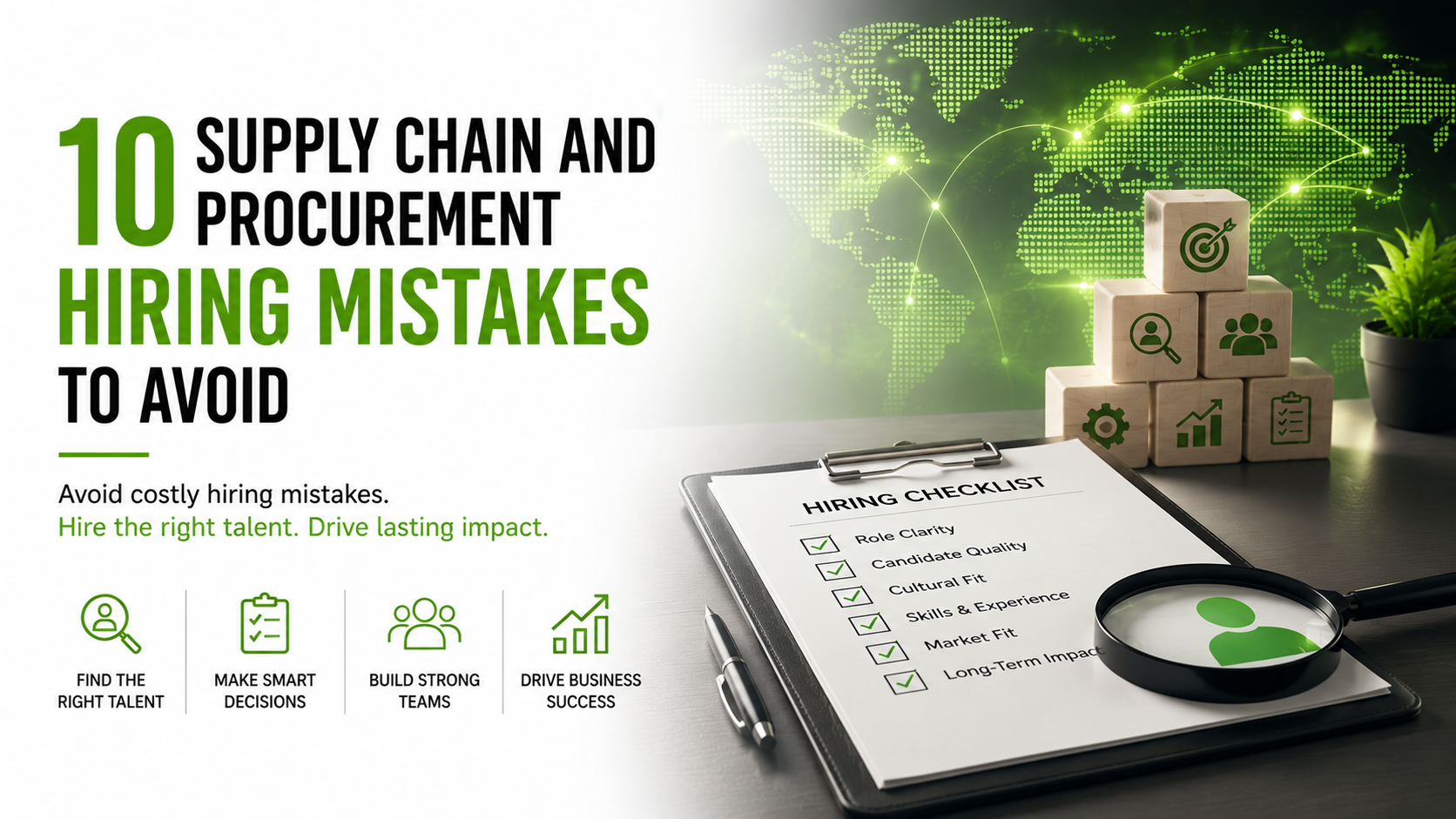
A bad hire is incredibly expensive. But so is investing time, effort, and money into a recruitment process only to come away empty-handed.
So how can organizations improve their chances of making the right hire?
Based on our experience recruiting supply chain and procurement professionals, here are some of the most common hiring mistakes we see—and how you can avoid them.
Every hiring manager knows that a poor hiring decision comes at a significant cost. While some of those costs are immediate, many don’t become apparent until later. Productivity suffers, managers spend valuable time addressing performance issues, teams become stretched, and businesses lose the investment made in recruiting, onboarding, and training. In some cases, the consequences can extend even further if the wrong hire makes costly operational or strategic decisions.
On the other hand, launching a hiring process and failing to secure the right candidate can be just as expensive. Every unsuccessful search consumes valuable resources and delays business goals. That’s why it’s worth taking a step back before beginning a recruitment process and asking a simple question:
What could prevent us from making the right hire?
At Argentus, our mission is to help organizations build stronger supply chain and procurement teams. Over the years, we’ve seen consistent patterns that can derail even well-planned hiring processes. By recognizing these pitfalls early, companies can significantly improve their chances of attracting and securing top talent.
The Real Cost of Hiring Mistakes
Whether you hire the wrong person or fail to hire altogether, the impact can be substantial.
Financial Costs
Even when recruiting internally, hiring requires a significant investment in advertising, screening, interviewing, onboarding, and training.
Lost Time
Hiring demands considerable attention from managers and stakeholders. Every interview, meeting, and delayed decision represents time that can’t be recovered.
Opportunity Cost
Every vacant role delays projects, slows operational improvements, and limits the value an exceptional supply chain or procurement professional could deliver.
With that in mind, here are ten of the biggest hiring mistakes we see organizations make.
1. Prioritizing Perfect Experience Over Business Acumen
Sometimes the strongest candidate hasn’t held the exact same job before.
Being overly rigid about experience requirements can unnecessarily shrink your talent pool. Look beyond matching keywords on a résumé and evaluate a candidate’s problem-solving ability, commercial thinking, leadership potential, and capacity to learn. Those qualities often matter far more than checking every box.
2. Judging Candidates Too Heavily by Their Job Titles
Job titles rarely tell the full story.
Some organizations use broad titles, while others assign highly specialized ones. Two professionals with different titles may have performed nearly identical responsibilities.
Instead of dismissing someone based on their title alone, take the time to understand what they actually accomplished and the level of responsibility they held.
3. Overlooking Highly Skilled Newcomers
Exceptional talent comes from all over the world.
Many newcomers bring extensive international experience, advanced technical expertise, and leadership backgrounds from globally recognized organizations. Expanding your hiring approach to evaluate skills and achievements—rather than focusing solely on local experience—can unlock an outstanding pool of qualified professionals.
4. Creating Too Many Interview Stages
A thorough hiring process is important, but an overly complicated one can work against you.
Top candidates often have multiple opportunities. Long interview processes create unnecessary delays and increase the likelihood that someone will accept another offer before you’ve made a decision.
Keep interviews structured, purposeful, and efficient.
5. Allowing Scheduling Delays to Slow the Process
Hiring momentum matters.
Interview delays caused by conflicting schedules or slow decision-making can quickly weaken a candidate’s interest. Establish a clear hiring timeline, ensure decision-makers are aligned, and keep the process moving from start to finish.
6. Starting Recruitment Before You’re Ready
Sometimes organizations begin recruiting before key decisions have been finalized.
Budget approvals, reporting structures, role expectations, and internal alignment should all be confirmed before candidates enter the process. Without this preparation, hiring can stall or require significant changes midway through the search, creating frustration for everyone involved.
7. Limiting Candidates with Narrow Role Definitions
The best supply chain and procurement professionals create value across departments. If a role is defined too narrowly, it may fail to attract high-performing candidates who thrive on collaboration, innovation, and strategic impact. Position the opportunity as one where talented professionals can influence the broader business—not simply perform isolated tasks.
8. Having Unclear Workplace Flexibility Policies
Candidates increasingly want clarity around how and where they’ll work.
Whether your organization offers remote, hybrid, or office-based work, communicate those expectations clearly from the beginning. Uncertainty around workplace flexibility can create hesitation and reduce confidence in the opportunity.
9. Failing to Benchmark Compensation Against the Market
Compensation plays a critical role in attracting top talent.
If salary expectations don’t align with current market conditions, candidates are likely to withdraw from the process or accept competing offers. Research market compensation before launching a search to ensure your offer remains competitive and realistic.
10. Forgetting That Great Candidates Have Choices
The strongest professionals are often considering multiple opportunities simultaneously.
Organizations that communicate clearly, move efficiently, and respect a candidate’s time consistently achieve better hiring outcomes. A positive recruitment experience reflects well on your company and increases the likelihood that top candidates will choose your opportunity over others.
Final Thoughts
Even the most experienced hiring teams encounter challenges. Recruitment is rarely straightforward, and not every factor is within your control.
However, avoiding these common mistakes can dramatically improve your hiring outcomes. A well-planned, candidate-focused recruitment process not only helps you attract stronger talent but also increases the likelihood of securing the professionals who can make a lasting impact on your organization.
We hope you found these hiring insights valuable. They serve as a reminder that successful hiring in Supply Chain and Procurement isn’t just about filling a vacancy—it’s about building teams that can create long-term business value.
As always, stay tuned to the Argentus blog for more insights into the evolving world of Supply Chain and Procurement. If you have any immediate or upcoming contract or permanent hiring needs, feel free to reach out to our team at recruit@argentus.com or call 647 449 5979. We’d be happy to help you find the right talent for your organization.


0 Comments